

Electric Propulsion Transforms the Safari Experience on Africa’s Chobe River
Electric Propulsion Transforms the Safari Experience on Africa’s Chobe River
The Pangolin Voyager shows how electric boating can create experiences that are quieter, cleaner and better connected to the places people come to explore.
Electric boating isn’t only about replacing gasoline or diesel engines with batteries. In some applications, electrification can fundamentally improve the experience of being on the water.
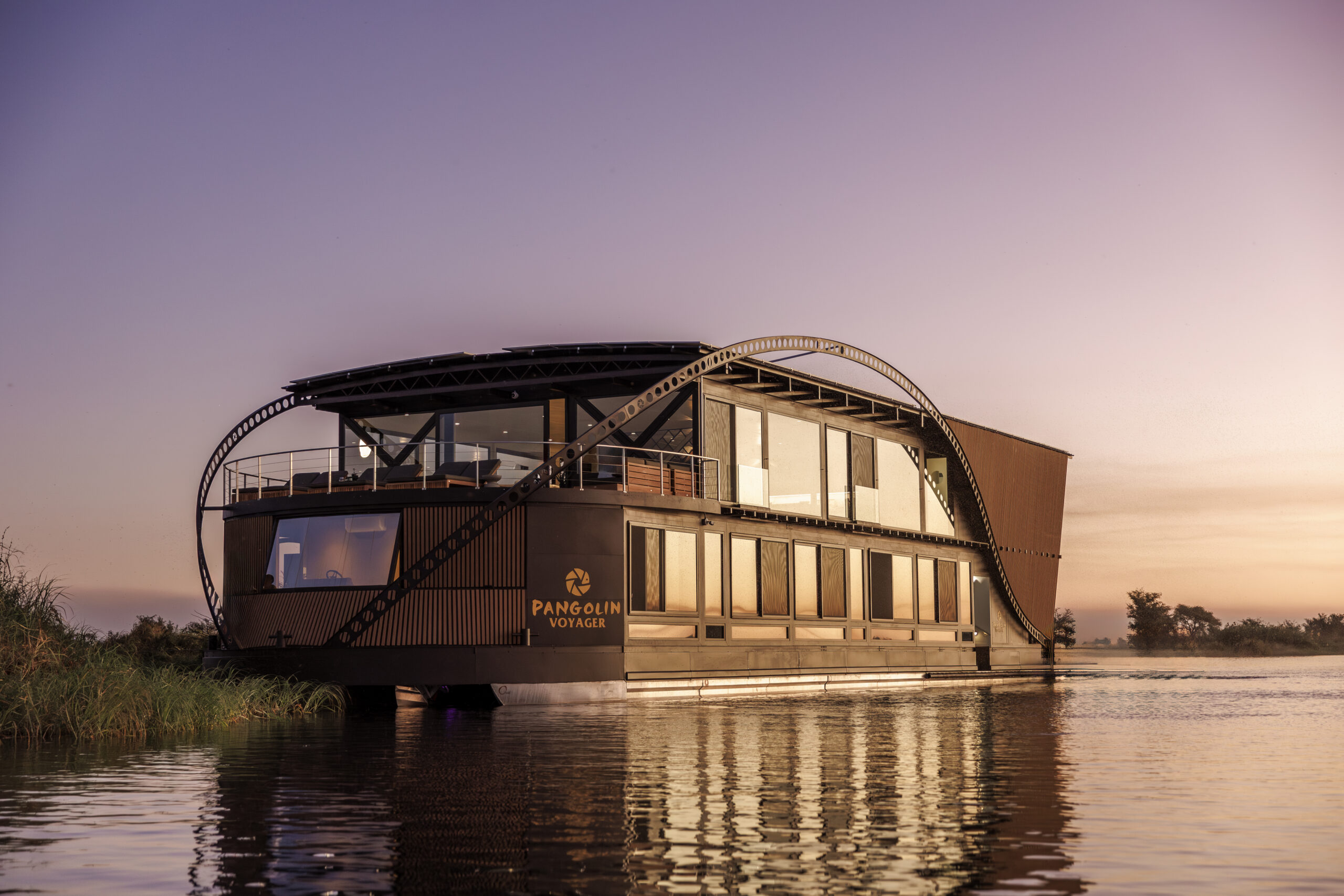
The new Pangolin Voyager on Africa’s Chobe River is a compelling example.

Pangolin Photo Safaris partnered with RAD Propulsion to create a solar-powered electric houseboat designed for multi-day wildlife photography safaris along the Chobe River, which forms part of the border between Botswana and Namibia.
Instead of the noise, vibration and emissions associated with traditional marine engines, guests can move quietly through one of Africa’s most wildlife-rich environments.
The result demonstrates something increasingly important for the future of boating:
Electric propulsion can make the experience on the water better.
A Fully Electric Safari Houseboat
The Pangolin Voyager is powered by four RAD 40 electric drives paired with two RAD batteries. The vessel’s energy comes entirely from onboard solar panels, creating a self-sustaining system designed to support both propulsion and life aboard the vessel.
The houseboat features five en-suite cabins and accommodates up to 10 guests, moving between several mooring locations during multi-day photographic safaris.
But perhaps the most interesting part of the project isn’t simply that the vessel is electric.
It’s what electrification enables.
Silence Becomes Part of the Experience
Wildlife photography depends on getting close to animals without disturbing them.
Traditional combustion engines introduce engine noise, exhaust and vibration into environments where silence has tremendous value.
Electric propulsion changes that equation.
The RAD 40’s low-noise and low-vibration operation allows the Pangolin Voyager to travel through the river environment with significantly less disturbance. That creates a quieter experience for guests while helping photographers observe wildlife without the constant background noise of an engine.
For tourism operators, this illustrates an important shift in how electric propulsion should be viewed.
Quiet operation isn’t simply an environmental benefit. It can become part of the product being sold to the customer.
The Houseboat Becomes the Charging Hub
The Pangolin Voyager also demonstrates another concept that could become increasingly important across marine electrification: distributed charging on the water.
Alongside the houseboat, Pangolin operates a purpose-built electric photography boat powered by a RAD 40.
Rather than returning to conventional shoreside infrastructure, the smaller vessel can recharge directly from the solar-powered houseboat.
In effect, the Voyager functions as both a vessel and a mobile energy hub.
That model has implications far beyond safari tourism.
Similar architectures could eventually support electric tenders, resort boats, rental fleets, research vessels, tour operators, water taxis and other commercial marine operations where traditional charging infrastructure may be difficult or expensive to install.
Electric Boating Solves Operational Problems Too
The project also highlights the operational advantages electrification can provide in remote locations.
Operating combustion engines in isolated areas means transporting and storing fuel, maintaining spare parts and dealing with service requirements far from traditional marine infrastructure.
Electric propulsion combined with locally generated renewable energy can reduce dependence on that supply chain.
RAD says the system provides reduced maintenance and significant fuel-cost savings while increasing reliability for extended safari operations.
For commercial operators, these considerations can be just as important as emissions reductions.
The business case for marine electrification increasingly includes:
- Lower fuel dependency
- Reduced maintenance requirements
- Quieter operation
- Improved passenger experiences
- Renewable energy integration
- New approaches to vessel and fleet charging
A Blueprint for Sustainable Marine Tourism
The Pangolin Voyager provides a glimpse of how marine tourism could evolve.
Imagine electric eco-tours through national parks, quiet harbor cruises, electric fishing lodges, resort fleets powered by onsite solar, or electric tenders charging directly from larger vessels.
In each case, electrification isn’t simply replacing an engine.
It can enable an entirely different experience.
That’s particularly important in destinations where the natural environment is the primary attraction. Noise, vibration and exhaust work against the very experience guests are paying to enjoy.
Electric propulsion allows the technology to fade into the background.
The water, wildlife and destination become the focus.
The Bigger Opportunity for Marine Electrification
At Sea Watts, we believe projects like the Pangolin Voyager demonstrate why the transition to electric boating will extend well beyond recreational boat ownership.
The emerging electric marine ecosystem will include boats, charging infrastructure, marinas, resorts, tourism operators, commercial fleets, destinations and entirely new experiences built around quiet, clean propulsion.
As these projects expand around the world, boaters will increasingly need an easier way to discover where they can go electric — from charging and electric-ready marinas to electric boat rentals, charters, tours, dealers and destinations.
This why Sea Watts is being built.
Discover the electric boating ecosystem. Find where to charge, boat, stay, rent and explore — all in one place.
The Pangolin Voyager is an excellent example of what happens when electric propulsion becomes more than an alternative powertrain.
It becomes part of the destination.
Source: RAD Propulsion — Pangolin Voyager project and original announcement.